






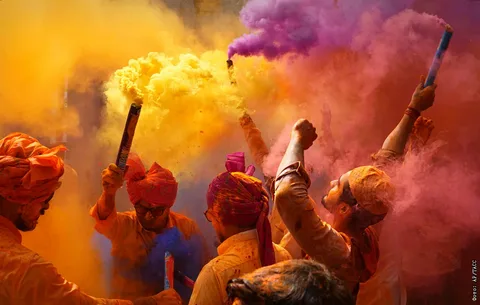
Holi snacks arrive in Indian homes much before the colours do. Days ahead of the festival, kitchens begin to change their rhythm. Steel tins are taken out from cupboards, spice boxes are refilled, oil is heated, dough is kneaded, and familiar aromas slowly take over the house. Even before the first streak of colour touches the skin, food announces that Holi is near. These snacks are not just festival treats; they are cultural signals, marking the transition from winter into spring and from routine into celebration.
Holi has never been a quiet or structured festival. It spills across courtyards, balconies, lanes, and rooftops. People come and go without warning, conversations overlap, music plays loudly, and laughter is constant. The food that belongs to such a festival cannot be delicate or formal. It needs to be sturdy, shareable, comforting, and bold. That is exactly what traditional Holi snacks and savouries are designed to be.
Why Snacks Became Central to Holi Celebrations
Unlike festivals that revolve around a single elaborate meal, Holi unfolds in motion. People rarely sit down at one time to eat together. Instead, they snack between conversations, colours, music, and rest. This pattern shaped the kind of food that became associated with Holi over generations.
Snacks offered flexibility. They could be prepared in advance, stored easily, and served repeatedly throughout the day. They were meant to be eaten standing up, shared quickly, or packed and carried to a neighbour’s house. In many ways, Holi snacks mirror the nature of the festival itself: informal, generous, and abundant.
These snacks were also created with seasonal wisdom. As winter ends, the body begins to adjust to rising temperatures. Heavier foods start to feel excessive, while overly cooling foods are still premature. Savoury snacks made with spices, moderate oil, and dry textures strike that perfect middle ground, offering energy without heaviness.
The Thoughtful Use of Spices in Holi Savouries
Spices in Holi snacks are never just about taste. Ingredients like ajwain, cumin, coriander seeds, black pepper, and hing are used deliberately. These spices stimulate digestion, reduce bloating, and help the body process festive indulgence more comfortably.
Holi is known for rich sweets, milk-based drinks, and fried foods. Without digestive support, these can easily overwhelm the system. Savoury snacks act as a counterbalance. Their saltiness enhances appetite, while their spices prepare the stomach for what follows.
This balance is one of the most underrated aspects of Indian festive food. Celebration was never meant to come at the cost of well-being. The traditional Holi table reflects a deep understanding of how joy and health can coexist.
Pickles as the Flavour Anchor of Holi Foods
While snacks provide crunch and body, pickles provide sharpness and contrast. A small spoon of achar alongside a dry snack can completely transform its flavour. The tang cuts through oil, the spice resets the palate, and the intensity ensures satisfaction in small quantities.
During Holi, pickles often play a supporting yet essential role. They sit alongside snacks, appear with simple meals after hours of celebration, and offer familiarity amid festive chaos. Their presence brings grounding to the table.
Traditional pickles, especially those from Nani ka Pitara, share the same philosophy as festive snacks. They rely on time, patience, and balance. This makes them natural companions during Holi, when food is meant to comfort as much as it excites.
Regional Diversity in Holi Snack Traditions
Holi may be one festival, but it tastes different across India. In North India, fried snacks dominate the spread. Mathri, namak pare, kachri, and spiced biscuits are prepared in large batches. These are robust snacks, often paired with bold pickles that can stand up to their richness.
In Gujarat and Rajasthan, snacks lean toward dry, spiced preparations that last for days. Sweetness often finds its way into savouries, creating a layered flavour profile that reflects the region’s culinary identity. These snacks are designed to survive heat and travel, much like the celebrations themselves.
Maharashtra brings its own interpretation with chakli, chivda, and sev-based snacks. These are lighter but deeply spiced, perfect for constant nibbling throughout the day. Pickles here often add heat and tang rather than heaviness.
Eastern India incorporates mustard-forward flavours even in festive accompaniments. While Holi is not as dominant a festival there, when celebrated, the food reflects sharp, pungent notes that awaken the palate.
In the South, Holi is more localised in its observance, but where it is celebrated, snacks tend to be rice-based and crisp, paired with sour and spicy condiments that suit warmer climates.
Together, these variations show how Holi adapts itself to regional food wisdom while retaining its celebratory core.
Holi Snacks as a Social Language
Food during Holi is rarely eaten alone. Snacks become a reason to pause, to gather, to talk. Offering a plate of savouries is often the first gesture of hospitality during the festival. It is an unspoken invitation to stay, to share, to participate.
In many homes, the act of preparing snacks is communal. Family members gather to shape, fry, and store them. Recipes are discussed, adjusted, and debated. Elders pass on small tips that never make it into written recipes. These moments build continuity across generations.
The snacks themselves become carriers of memory. Years later, a familiar crunch or spice note can bring back an entire Holi afternoon in vivid detail.
The Relevance of Traditional Festive Food Today
Modern celebrations often lean towards convenience. Store-bought snacks replace homemade ones, and festive tables become increasingly uniform. While convenience has its place, something essential is lost when traditional food rituals disappear.
Homemade snacks and carefully prepared accompaniments carry intention. They reflect effort, planning, and care. Even when prepared in smaller quantities, they create a festive atmosphere that feels personal rather than transactional.
Pairing traditional snacks with thoughtfully prepared pickles reinforces this sense of authenticity. It brings depth to the table and reminds people of flavours that feel familiar and grounding, even as celebrations evolve.
When the Colours Fade, the Food Remains
Holi ends quietly. The colours wash away, music stops, and routines slowly return. What often lingers longest is the taste. The last few snacks eaten in the evening, the simple meal shared after a long day, the lingering tang of achar on the tongue.
Festivals are remembered as much through flavour as through visuals. Holi snacks and savouries hold that memory gently. They do not demand attention, yet they remain unforgettable.
In that sense, food during Holi is not just about indulgence. It is about continuity. It is about returning, year after year, to flavours that feel like home. Through every crunch, every spice note, and every shared plate, the festival finds its rhythm, reminding us that celebration, at its heart, is always meant to be shared.



![Is Zombieland on Netflix? Watch All Parts on Netflix [2022]](https://easywizzy.com/wp-content/uploads/2022/09/Is-Zombieland-on-Netflix.webp)